Why We’re Inviting Towerbank Parents to Think About Delaying Smartphones
At Towerbank, we care about giving our kids room to play, grow, and just be themselves. We want them to be connected, but through real-life friendships and play, not through algorithms and endless scrolling.
We know that being the lone parent saying no to a smartphone is hard. But when we delay together, as families and communities, it becomes easy.
That’s the whole point of the Smartphone Free Parent Pact – a collective agreement to delay getting our kids smartphones until at least 14, and social media 16.
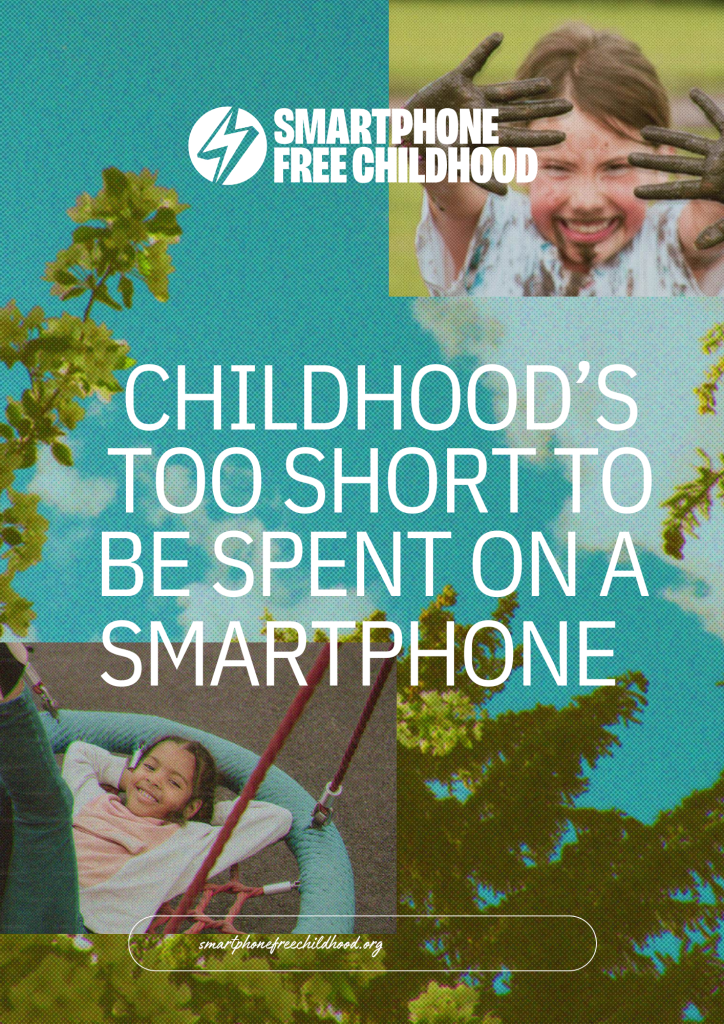
It’s organised around school communities, so the more of us who sign it in any area, the more powerful it becomes. More than 160,000 families in the UK have already signed, which is pretty incredible! Towerbank School currently has over 50 families signed up and we would love to see this number increase.
It’s not about being strict or “anti-tech”; it’s simply about making things easier for all of us. We know there is a place for screens of course (yes, we do!), but we feel strongly that it’s not at primary school.
When one family delays smartphones, it can feel impossible, but when a whole school does it together, suddenly the pressure lifts. Kids feel less left out, and parents don’t feel like the odd ones out. Then when neighbouring schools join in too, children head to secondary not as outliers, but as part of a whole smartphone-free group.)
Why Wait on Smartphones?
Smartphone Free Childhood, along with plenty of child development experts, suggests that holding off a bit can support our kids in a few key ways:
It Supports Mental Wellbeing
Research shared in the SFC Parent Talk Hub shows links between early smartphone use and higher anxiety, loneliness and disrupted sleep. A bit more time without a smartphone gives children space to develop resilience before stepping into the online world.
It Leaves More Room for Real Play
Without buzzing notifications, kids tend to spend more time outside, getting creative, and forming strong face-to-face friendships, all the things that matter most during childhood.
It Helps with Focus and Learning
Teachers and parents often notice that waiting on smartphones makes it easier for children to concentrate, enjoy reading and stay present in class.
How Parents Can Get Involved
The SFC Parent Talk Hub has lots of simple, practical ideas for families:
Chat with other parents
A quick conversation in the playground or class WhatsApp group can make a big difference. When parents agree together, the decision becomes much easier.
Offer an alternative
If your child needs a way to stay in touch, there are plenty of options that don’t involve handing over a full smartphone.

Alternatives to Smartphones
If you have decided to delay giving your child a full smartphone, SFC offers helpful suggestions for what you can provide instead. These alternatives help children stay reachable while avoiding many of the risks of a full internet device. More details are available at smartphonefreechildhood.org/alternatives
Basic “First Phones” (Calls and Texts Only)
For children aged about 11 to 14 who are starting secondary school or travelling independently, simple phones that allow only calls and texts are recommended by SFC. These keep communication open without exposing children to social media or web browsing.
Follow-On Phones (More Features, Still Limited)
For teenagers aged 14 to 16, SFC suggests “follow-on” phones that offer a few more features, such as a camera or basic multimedia, but still exclude open web browsers or social media feeds. This allows more independence while maintaining healthy boundaries.
Kids’ Smartwatches or Trackers
If you prefer a lighter option, children’s smartwatches with SOS buttons, GPS tracking, and approved contacts are good choices. These allow communication and safety checks without providing a full screen device.
Data-Free SIM Cards
For families using existing phones, SFC recommends SIM cards that allow calls and texts but no data or internet access. This ensures children can stay in touch without accessing the web or apps.
These options help parents balance safety, independence, and screen-free development.
Helpful Resources
Smartphone Free Childhood: Parent Talk Hub
The Social Dilemma – a documentary exploring how social media affects young minds
Together, we can help our children grow up with imagination, friendship, and freedom from screens. Let’s do it together! https://www.smartphonefreechildhood.org/parent-pact
Notes from the ‘Lets talk about our kids and their tech talk‘.
 Towerbank Parent Council
You must be logged in to post a comment.